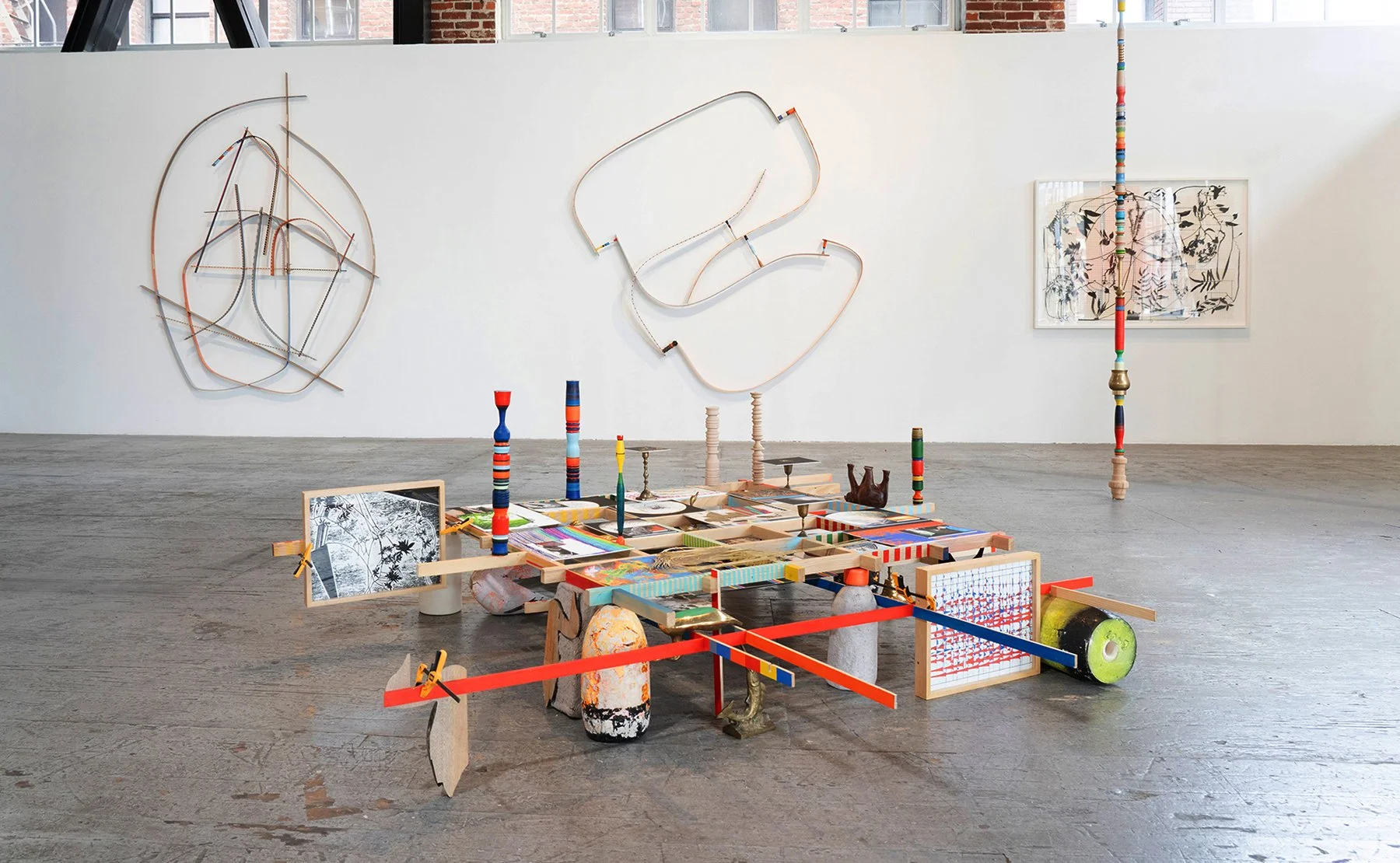
Elena Bajo

Artist Statement

My practice positions plants as active collaborators and sentient agents within ecological and ancestral systems. Drawing from my matrilineal Galician heritage—where my grandmother taught me to recognize plants as healers and teachers—I engage with Celtic druid cosmologies, treating plants as living instructors that inform each phase of my process. This echoes Karen Barad's concept of intra-action, where boundaries between human and more-than-human dissolve. My work blurs art, science, and ritual through sculptural interventions, choreographies, textile+AI, and video. I invite encounters that honor ancestral wisdom alongside contemporary ecological urgency. Each project is site-responsive, guided by attentive listening and respectful kinship with the living land. Through embodied practice rooted in my mother's sidewalk choreographies—translating landscape into movement—I cultivate spaces that nurture encounters between human and more-than-human consciousness. At Marble House Project, I propose deepening this commitment: making kin with White Oak and Mugwort as teachers, creating installations and rituals that prototype alternative futures rooted in reciprocity and ecological care.
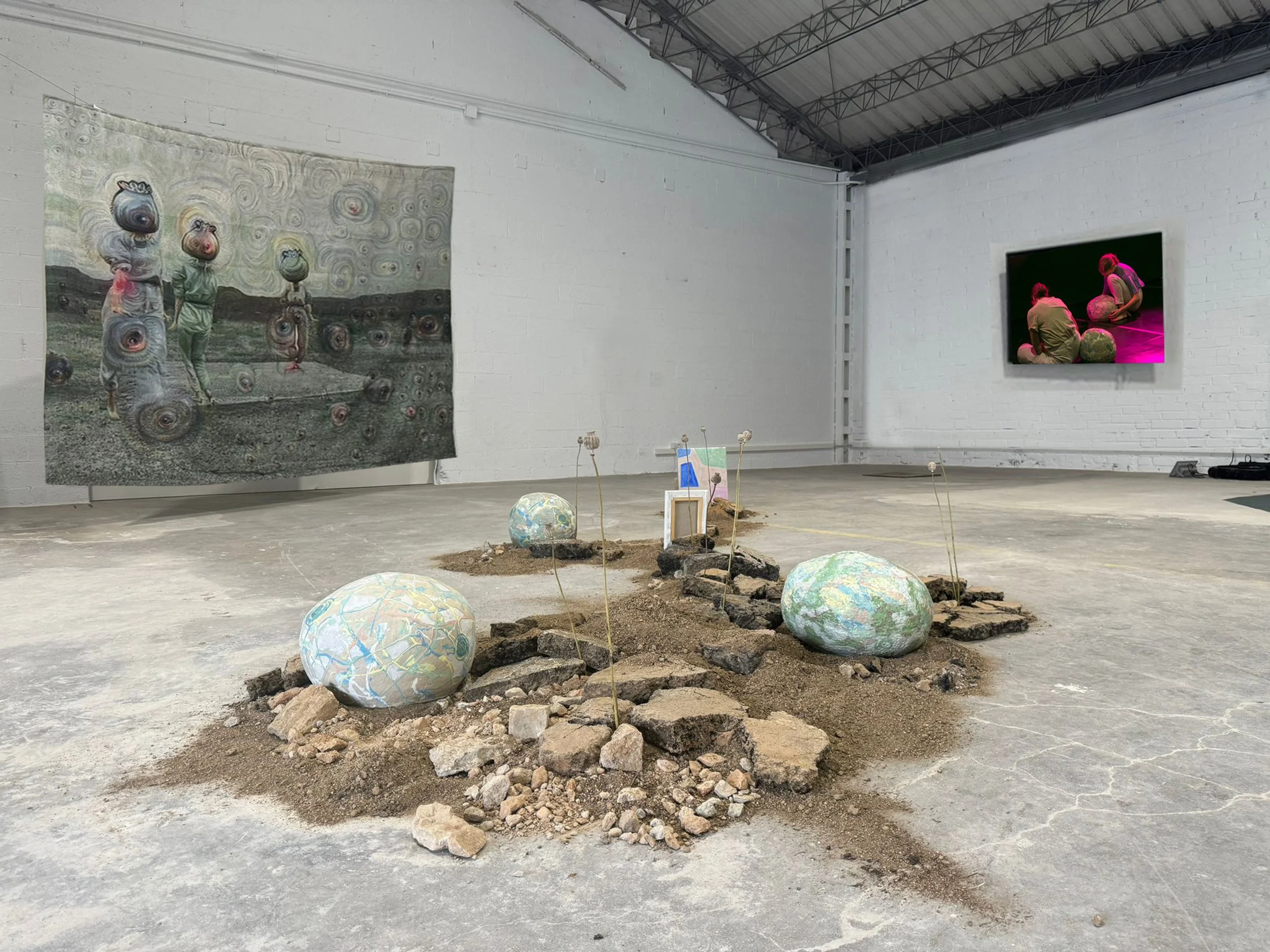
Description: "A Growing Wave Breaks in the Shore of Time (Tomorrow I was a plant)," 2020–2024. Multi-element performative installation, variable dimensions. Curator Nuria Montclus, Commission for Manifesta 15 Biennial, Barcelona, Spain (2024) — Europe's premier nomadic contemporary art biennial. This expansive site-responsive installation transforms gallery space through a constellation of ceramic, plants, stone, rubble, textile, and performative elements that activate Karen Barad's concept of "intra-action"—the radical entanglement of human, more-than-human, and material agencies. At the installation's core rest three monumentally scaled iridescent ceramic spheres (resembling seeds, eggs, or planetary bodies), nested within sand and reclaimed stone, creating what appears as ancient ceremonial thresholds while simultaneously evoking speculative futures shaped by deep time geological consciousness. The work materializes Bajo's "anarchoreographic" methodology—a non-hierarchical, decentered approach to performance and spatial organization that refuses traditional choreographic hierarchy. Textile banners suspended within the installation (woven using Jacquard looms, proto-digital machines that translate code into cloth) feature AI-processed patterns derived from the artist's altered-consciousness drawings, creating a transmaterial dialogue between ancestral knowledge, algorithmic intelligence, and botanical consciousness. The iridescent ceramic surfaces shift chromatically as viewers navigate the space, echoing both Byzantine-era cosmological symbolism and contemporary quantum aesthetics. During Manifesta 15's four-month presentation (100,000+ visitors), the installation was publicly activated through meditative encounters where visitors engaged in "transcorporeal choreographies"—embodied practices that dissolved boundaries between human movement and plant temporality. The work proposes plants not as passive landscape elements but as "narrators of their own history" and alternative epistemologies for understanding deep time, ecological resilience, and more-than-human collaboration. Materials: Reclaimed rubble from local industrial decay, stones, sand, ceramic vessels (hand-glazed with iridescent finishes), jacquard loom textiles with AI-generated patterns, dried papaver capsules, liquid extract, plant parts, seeds,leaves, flowers, seeds, water elements, plant opium perfume, acrliyc and watercolor plant pigment on canvas, performative installation.
Bio

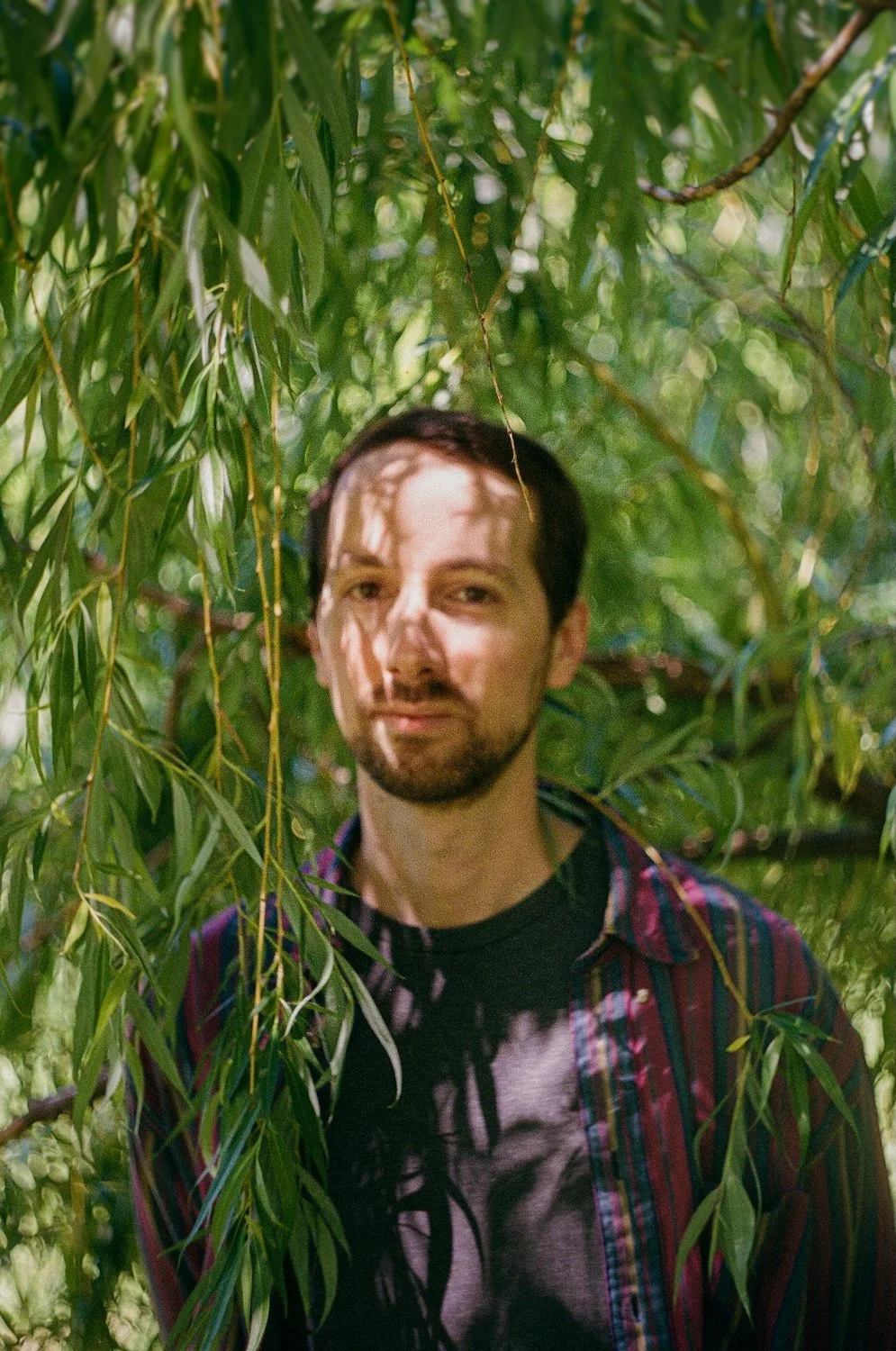
Elena Bajo is a Spanish-American artist, choreographer, and educator whose transdisciplinary practice explores plant consciousness, ancestral knowledge, and ecological transformation through sculpture, performance, textiles, video and AI collaboration. Her artistic vision is rooted in matrilineal Druid-Celtic heritage. Bajo redefines posthuman ecologies through "transcorporeal choreographies," positioning human, more-than-human, and machine intelligence as equal co-authors. Her work has been exhibited internationally recent commissions include Manifesta 15 Barcelona (2024) and SkulpturenPark Wesenberg, DE (2024); Socrates Sculpture Park, NY; Casa Encendida, Madrid; Conde Duque, Madrid; Kunsthalle São Paulo; ARTIUM Museum, ES; Performa Biennial, NY; Bajo’s work is featured in major public and private international collections and has appeared in publications such as Artforum , Frieze, Flash Art, ABC Cultural, El Pais, The New York Times and Künstler Kritisches Lexikon der Gegenwartskunst. She has received major support from grants and fellowships including the LMCC Art Center Residency (2023), Matadero Madrid Residency (2022), Rauschenberg Emergency Grant (2022), Foundation for Contemporary Art NY Emergency Grant, Mondriaan Fund, Audemars Piguet Award (2017), and Botín Foundation International Visual Arts Grant (2018). Trained in fine arts (Central Saint Martins, London), pharmacology (Complutense University), and genetic architecture (ESARQ UIC Barcelona), her practice bridges Laban/Bartenieff movement studies (TanzFabrik Berlin) with plant consciousness research. She is founder of S.L.A.B Project, an ecological art platform in Wonder Valley, California. Currently Coordinator of Integrative Art Studies at Saas-Fee Summer Institute of Art (New York & Paris). As First Place Fellow for 2026 at C3A, Center for Comporary Art in Córdoba, Spain, she is currently developing "Al-Andalus Quantum Artemisia Dreams: Time Weaver"—a major installation exploring plant consciousness through ancestral Iberian ceramic and textile traditions.


http://www.elenabajo.com


Simon Rivet

Artist Statement

As a composer, I seek to evoke the unseen: the underlying forces of nature and consciousness that shape our inner and outer worlds. My music is an invitation to pause, to contemplate, and to reconnect with our “silent sanctuary” within. Rooted in a contemporary spirituality, my practice explores how music can foster a renewed sense of intimacy with the natural world and with ourselves. I am especially drawn to themes of synthesis and balance between ancient and modern, intuitive and structural, spiritual and material.

Bio

After an early career as classical guitarist, Simon has been exploring music composition for concert, film and dance. As an emerging composer, his recent chamber and orchestra music have received recognition from various international competitions (1st prize Kreitler Commission Competition, 1st prize “La gnove musiche” International Orchestra Composition Competition, 1st prize “SYN(es)THESIS” International Composition Competition), and have been played by ensembles in Canada, USA, Bulgaria and Italy. His music is a reflection of the underlying forces of nature, and, consequently, of humanity’s own internal forces. It is an invitation to stop, contemplate and connect with one’s deeper dimension ; to enter one's “silent sanctuary”.


www.simonrivet.com


Tanya Marcuse

Artist Statement

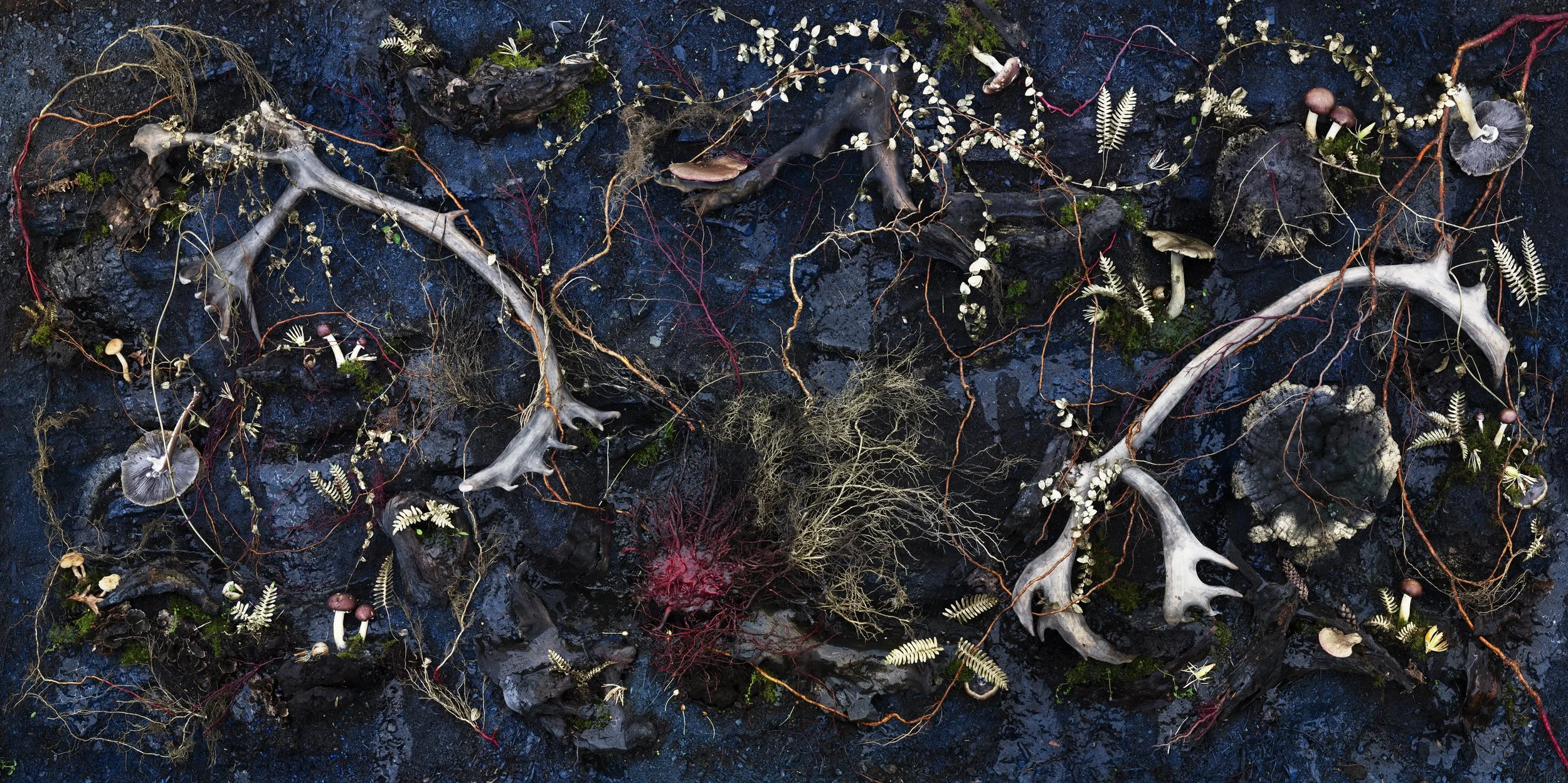
My large-scale photographs explore the imperiled natural world and the dynamic tension between the passage of time and the photographic medium. I construct elaborate tableaux and use increasingly fantastical imagery to investigate cycles of growth and decay, creation and destruction. While the final work is a photograph (or film), my methods often involve painting, sculpting—even gardening. My most recent project, Book of Miracles, began during the early months of the pandemic and has unfolded against a backdrop of political and environmental crises. It draws inspiration from the 16th-century Wunderzeichenbuch (Book of Miracles), an illustrated compendium of biblical, astronomical, and apocalyptic wonders and omens. I use paint, fire, and staged scenes to visualize events that seem to defy natural laws, creating images that reward slow looking and suggest that the miraculous may be hiding in plain sight. Photography often walks a thin line between fact and fiction; my work embraces this ambiguity, inviting viewers into an expanded sense of what is possible and real.

Tanya Marcuse Nº 4a Book of Miracles (Part I Kingdom) 62 x 124"

Bio

Tanya Marcuse (b. 1964) is an American photographer whose work has been exhibited internationally. Her work is held in major public collections, including the Metropolitan Museum of Art, the San Francisco Museum of Modern Art, the George Eastman Museum, the National Gallery of Art, the Baltimore Museum of Art, and the Yale University Art Gallery. She has received a Guggenheim Fellowship, a Peter S. Reed Grant, an American Scandinavian Fellowship, two MacDowell Fellowships, and a 2025 NYFA Fellowship. Marcuse began photographing as an early college student at Bard College at Simon’s Rock before studying Art History and Studio Art at Oberlin College. She earned her MFA from Yale University. Her books include Undergarments and Armor (2005), Wax Bodies (2012), Fruitless | Fallen | Woven (2019), Ink (2021), Portent (2024), Deer (2026), and Book of Miracles (forthcoming, Radius Books). Marcuse lives and works in New York’s Hudson Valley, and teaches at Bard College.


www.tanyamarcuse.com


Ethan Evans

Artist Statement

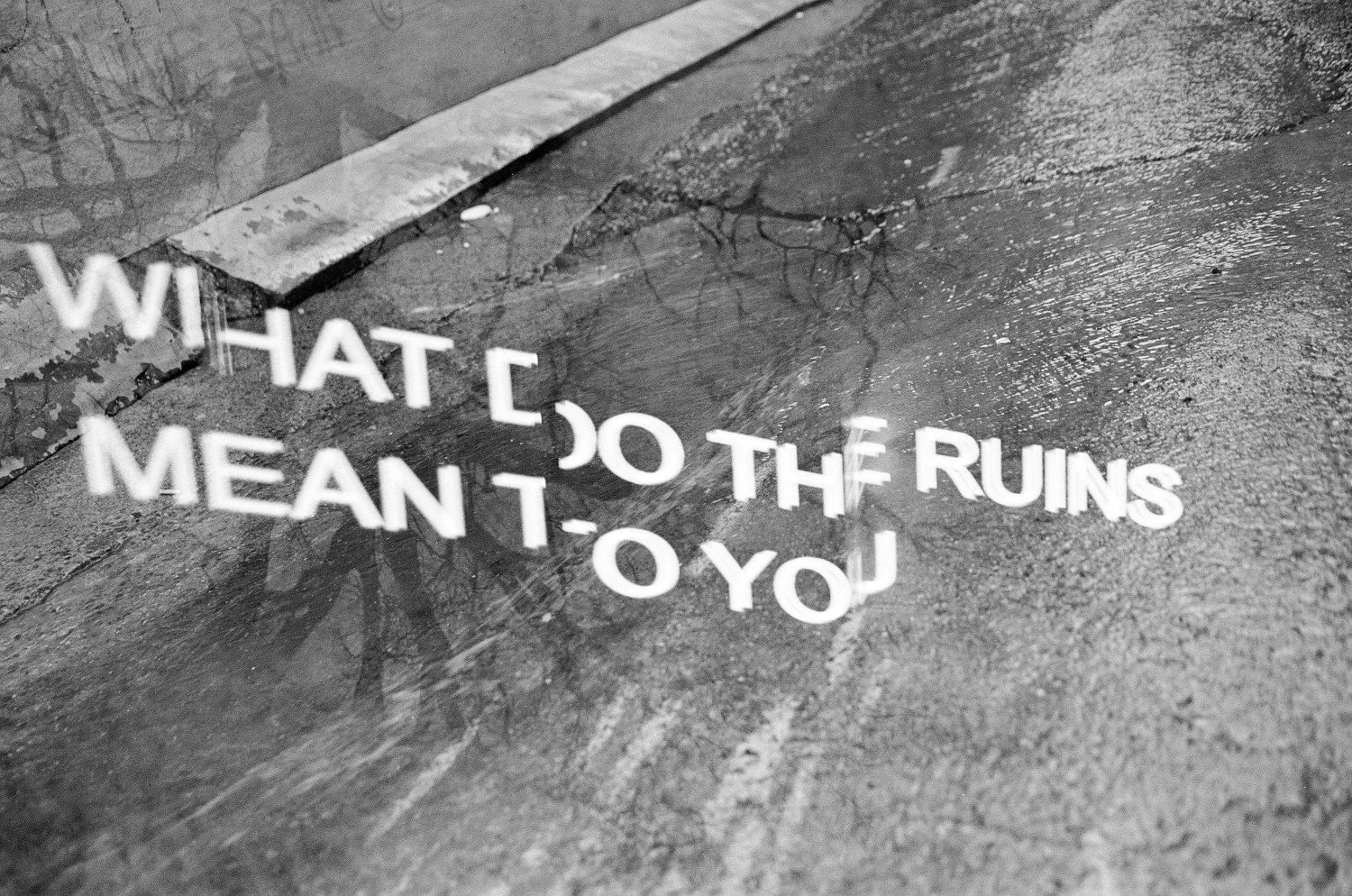
I write towards a phenomenology of collapse, drawing on my training in conservation, my identity as a survivor of the opioid epidemic, and my inherent complicity as a citizen of the United States within armed conflicts around the world. I don’t view these subjects as disparate. Market forces govern the construction of the housing development in what used to be a meadow across from my apartment just as they govern, say, the price per gram of fentanyl or the percentage of my income tax that goes to the military, but their linkages are vast and subtle. I seek, through soft collage, found language, and hybrid forms, to hew narratives from the blasted landscapes of end-stage capitalism.

Black and white photograph with text

Bio

ethan s. evans (they/them) is a central-Virginia based writer and photographer. A current Virginia Humanities fellow, ethan's work has appeared or is forthcoming in venues like The Kenyon Review, ONLY POEMS, terrain.org, and poets.org. They come to poetry from a background in habitat restoration. (ethansevans.com)


ethansevans.com


Jennifer Shin

Artist Statement

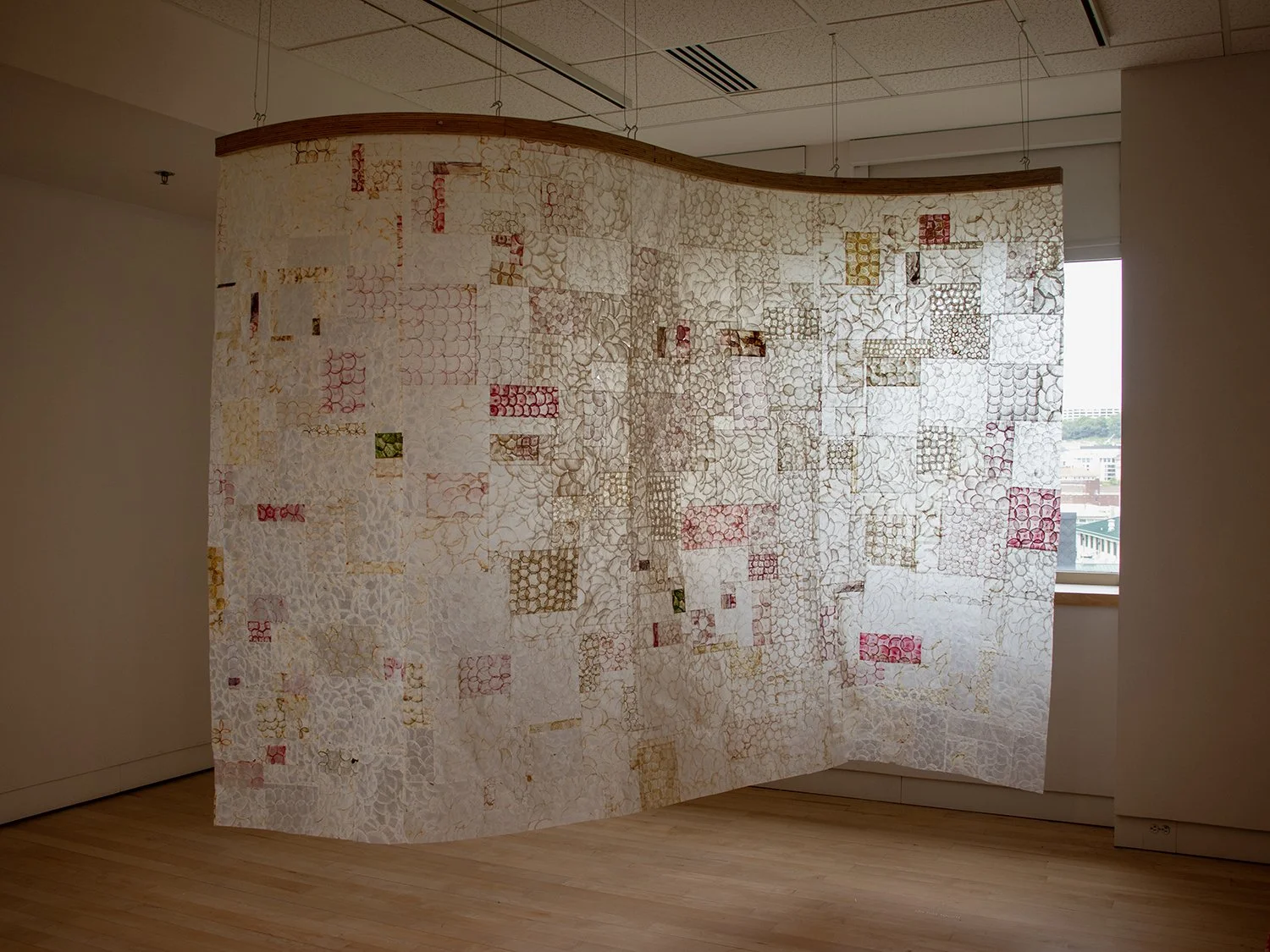
I work with food and craft to explore care, time, and the lives of ephemeral materials. Seasonal produce is central to my process; I transform fruits and vegetables into paper-like sheets that are pieced together into quilts, bound into books, or shaped into sculptural objects. This act of preservation extends what is fleeting, drawing from traditions of fermentation and food saving as ways of holding memory. In parallel, I approach cooking as a tactile, communal craft. Through edible installations and shared meals, I treat the table as a studio where ingredients become gestures to reflect on impermanence, care, and the everyday acts that sustain us. Across these practices, I consider how food carries emotional and cultural histories, becoming both nourishment and archive. My work lingers on what materials leave behind, asking how we might honor what passes while building community through small, shared moments.

Jennifer Shin / Sound x Taste tablescape for FUSION, 2024, Photo credit: Troxum

Bio

Jennifer Shin is an interdisciplinary artist based in Seoul and New York. Working with food and paper, she explores how fleeting materials carry memory, whether through handcrafted objects or shared meals. Alongside her paper-making practice, she cooks and organizes communal food gatherings where food becomes a medium for connection and care. She received her BFA from Carnegie Mellon University in 2024. Her work has appeared in exhibitions and community programs at the Miller ICA, Pittsburgh Cultural Trust, and The Folly Tree Arboretum, as well as in publications and features including Robida, Produce Parties, Art and Type Magazine, and the menu card series for the Michelin-starred restaurant Atomix.


https://jennifershinart.com

Sharon Harper

Artist Statement

I use lens-based media to reflect upon ways we are woven into relationship with natural world, to pose questions, and to learn from images themselves. Being in relationship with a camera and the world provides distinctive ways of knowing. I use the camera to challenge the surface of images and shift. Some questions that recur are: How can we understand and imagine with lens-based media things we couldn’t access or understand without it? How can the camera be a partner in co-creating work? How can technology reveal our interrelatedness? Recently, I’ve looked at ways that cultural traditions arise from and are shaped by the land itself. The inter-relationship between spiritual and geologic qualities of a landscape shape belief systems, and those help determine how societies relate to the land. I am interested in learning ways that cultures offer lessons from living in reciprocity with precarity and the land.

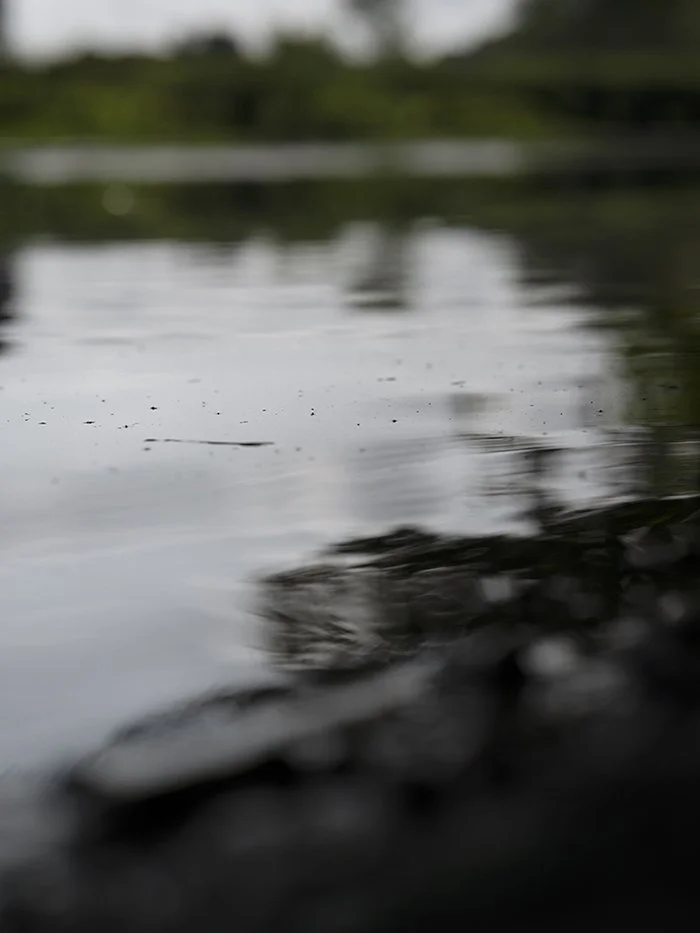
Wetlands (Charles River), work-in-progress, 2025 Archival photographic print, 40” x 30”

Bio

Sharon Harper works at the intersection of technology, perception, and the living environment. Her work is in permanent collections at the Museum of Modern Art, New York, the Whitney Museum of American Art, New York, The Metropolitan Museum of Art, New York, The Museum of Fine Arts, Houston, The Albright-Knox Art Gallery in Buffalo, the Harvard Art Museums, the Santa Barbara Museum of Art in Santa Barbara, California, the Nelson-Atkins Museum in Kansas City, Missouri, The New York Public Library, and the Denver Art Museum among other collections. She is the recipient of a Guggenheim Fellowship in Photography, a Meredith S. Moody Residency Fellowship and an Elizabeth Ames Residency Fellowship at Yaddo, a Sam and Dusty Boynton Residency Fellowship at the Vermont Studio Center, and residency fellowships at the Headlands Center for the Arts in Sausalito, California the MacDowell Colony, the Ucross Foundation, the Virginia Center for the Creative Arts, the Monastery of Halsnøy, Norway and the Bernheim Arboretum and Research Forest in Kentucky. A monograph of her work, From Above and Below, was published by Radius Books. She is Professor of Visual Art, Department of Art, Film, and Visual Studies, Harvard University.


sharonharperstudio.com


Yolanda He Yang

Artist Statement

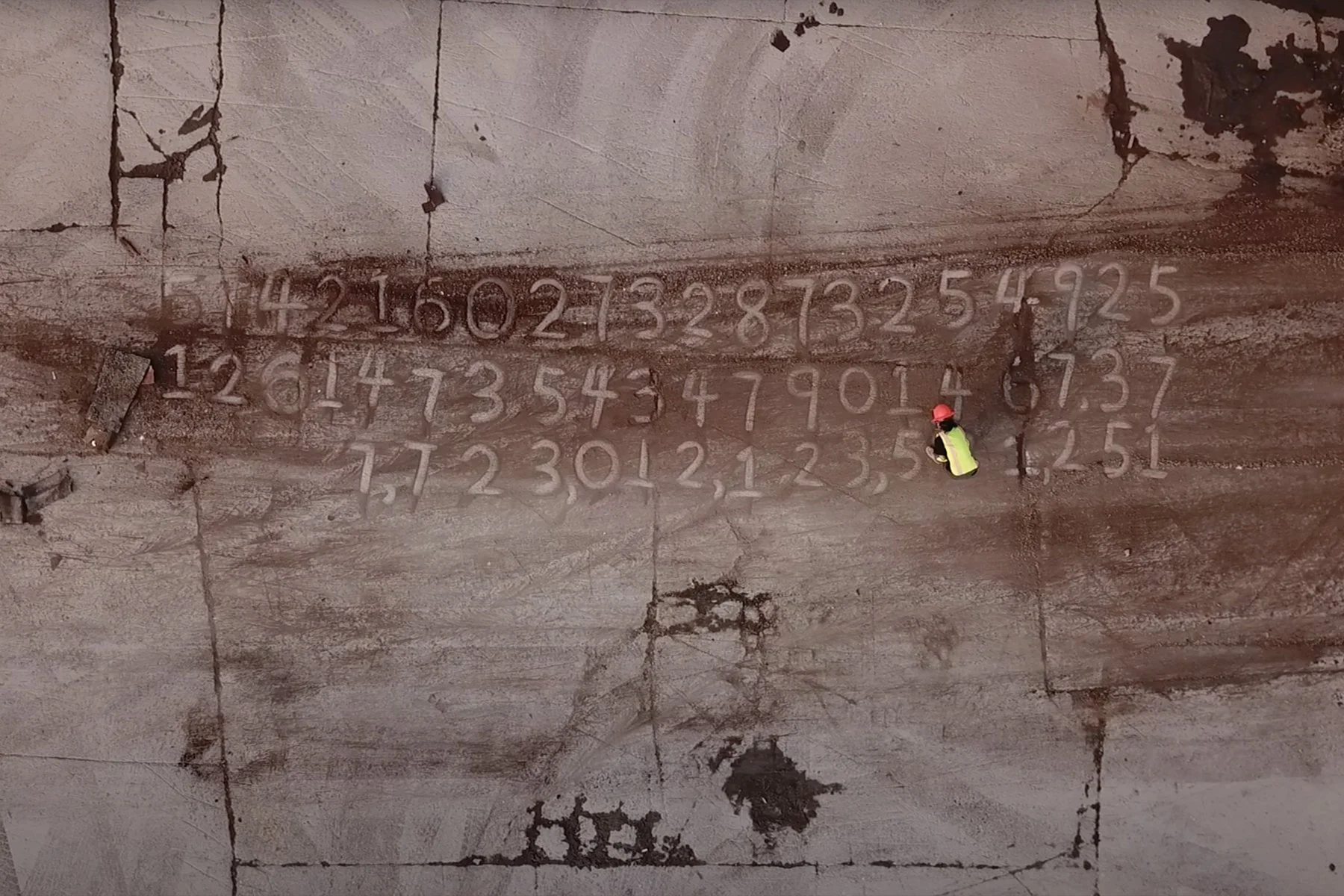
Yolanda He Yang is a China-born, Boston-based installation and performance artist whose practice engages natural materials, such as dust, dirt, and debris, to write ephemeral “eco-letters” that mourn, honor, and question the invisible forces shaping how we live and remember. Raised in a Catholic family in Northern China, her work draws from embodied rituals and inherited silence, using gestures of care to explore the tension between personal histories and collective ecologies. Rooted in maintenance art and relational performance, her recent projects unfold through slow, site-specific acts, dusting demolition sites, tracing ground surfaces, and composing temporary marks with found matter. In these quiet performances, she explores kinship with the more-than-human world and reflects on the politics of labor, impermanence, and belonging.

Yolanda Yang_Perishable Floor -Performance Documentation_Performance Documentation_2025_RAIR, PA

Bio

Yolanda He Yang is an installation and performance artist born and raised in a Catholic family in North China. Growing up through frequent relocations between homes, schools, and playgrounds shaped her sensitivity to impermanence, labor, and lived environments. Her work draws on subtlety and ephemerality as quiet yet powerful forces tied to materiality and storytelling. Through site-responsive practice developed across diverse geographies, she engages each place through observation, embodied response, and collaboration with local ecological and social systems. Her recent residencies span from prehistoric landscapes in Cairo and Luxor, Egypt, to a demolition and construction recycling site at RAIR (PA), agricultural cornfields at Villkulla Residency (NE), and an upcoming nature-based residency at the Marble House Project (VT). Across these contexts, her research uncovers layered temporalities, environmental memory, and the invisible labor embedded within each site. Yolanda’s work has been exhibited in both public and indoor spaces, including Harvard Square, Brookline Arts Center, The Rose Kennedy Greenway, Vox Populi (Philadelphia), Flux Factory (New York), Villekulla Farm (Nebraska), and MG Space (Beijing), among others. She is a recipient of support from the Andy Warhol Foundation for the Visual Arts, the Mayor’s Office of Arts and Culture in Boston, Collective Future Fund, Boston Chinatown Community Grant, and Cambridge Arts Association. A 2025 MassCreative Fellow, she leads Behind VA Shadows, amplifying the creative voices of frontline museum workers. She holds an MS in Arts Administration and an MFA in Sculpture from Boston University.


https://www.yolandayanghe.com/

Adriane Colburn

Artist Statement

Over the past several years I have developed a body of work based on the complex relationship between human infrastructure, earth systems, technology and the natural world. These drawings, sculptures and installations are derived from my research into landscape history, ecology and global systems. Within this practice, an enthusiasm for the abstract compositions of mapping (and its ability visualize systems that could not be otherwise seen as a whole), is woven with a long-standing investment in materiality and the natural world, a fascination with global systems and an early and sustained interest in Climate Disruption.

Everything is Everything, 2023 Photo: Adriane Colburn

Bio

Adriane Colburn is an artist based in Jersey City, NJ and Vermont. Her work reflects a long-standing investment in materiality, extraction and the natural world; a fascination with mapping and global systems; and an early and sustained interest in Climate Disruption. Her work has been exhibited broadly including at Smack Mellon, and Parsons/New School in New York, Gallery 16 and The Yerba Buena Center in San Francisco, Ballroom Marfa, TX, Artsterium in the Republic of Georgia, the Eres Foundation in Munich, The Berman Museum, PA and at the Royal Academy of Art in London. Her work has been shaped by artist residencies at the Headlands Center for the Arts, the Macdowell Colony, SPACE on Ryder Farm, The Blue Mountain Center, and with the Cape Farewell Project. Additionally, she has participated in numerous scientific research expeditions in regions ranging from the Arctic to Central and South America. Awards include the New Jersey State Council on the Arts, The Franklin Research Fellowship/ American Philosophical Institute, The Fleishhacker Foundation and Artadia Award. She is currently on the faculty at Bard College.

www.adrianecolburn.com


Arya Samuelson

Artist Statement

I am a writer dedicated to unearthing the stories of the body and transforming them into art. I’m fascinated by how our bodies store memories that connect to our deepest wounds, shames, and desires, and how we can transmute these into stories that create new possibilities for healing. My writing is intimate and visceral, yet always in dialogue with the social forces that shape my embodiment, such as reproductive rights, environmental justice, Jewish trauma, queerness, and feminism. I'm obsessed with connecting disparate things and creating music from dissonance. My work braids themes of grief, desire, and joy, and weaves together topics—such as body-based narratives and ecological systems—revealing kinships between seemingly separate worlds. I'm driven by queerness as a mode of inquiry: exposing the lesser-told story, delighting in multiplicity, and stretching the poetics of form. My stories often write towards impossible questions and discover new possibilities from the reckoning.

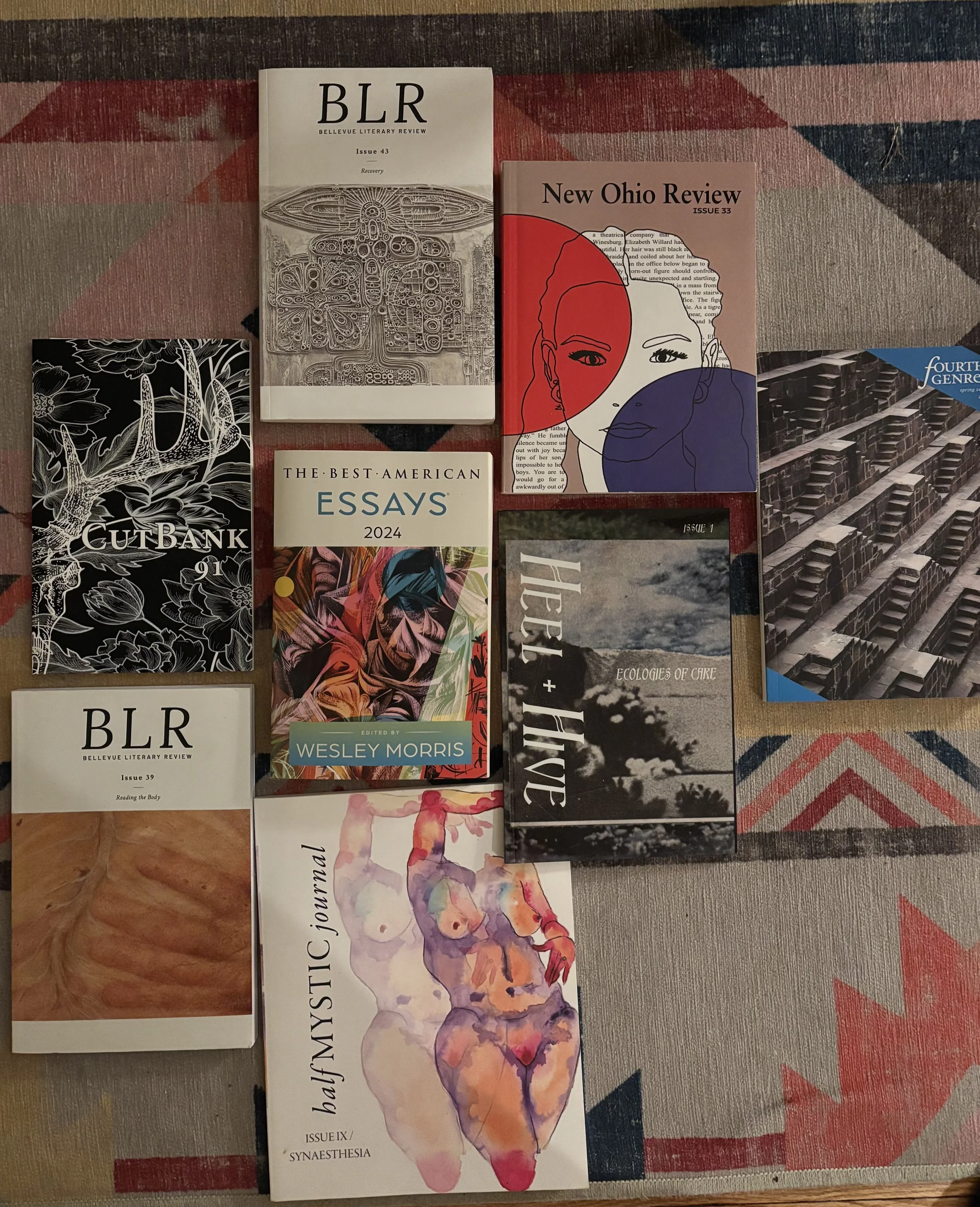
My work is featured in all of these literary journals.

Bio

Arya Samuelson is a writer, editor, educator, and somatic practitioner-in-training in Western Massachusetts. She is the winner of New Ohio Review’s Nonfiction Prize, Lascaux Review’s Nonfiction Prize, and CutBank’s Montana Prize in Nonfiction awarded by Cheryl Strayed. Her essay, “I Am No Beekeeper” was selected as Notable in Best American Essays 2024. Other essays and stories have been published in Fourth Genre, Bellevue Literary Review, Columbia Journal, Gertrude, and elsewhere. Arya holds an MFA in Creative Writing from Mills College, and her work has received support from Ragdale Foundation, Straw Dog / Edith Wharton, Virginia Creative Colony for the Arts, Vermont Studio Center, and Juniper Summer Writing Institute. Arya teaches and works as a developmental editor and creative coach to help writers unearth the deeper story. She is currently writing a memoir, a novel, and a book of essays.


www.aryasamuelson.com